

Indian Post Colonial Pie
A pie of my own invention, where cottage pie meets mild curry and the long shadow of empire

Indian Post Colonial Pie is a reflective kitchen essay for International Pie Day, on a pie that straddles borders, blending cottage pie and mild colonial curry while exploring empire, memory, Partition, and the layered histories carried by food.
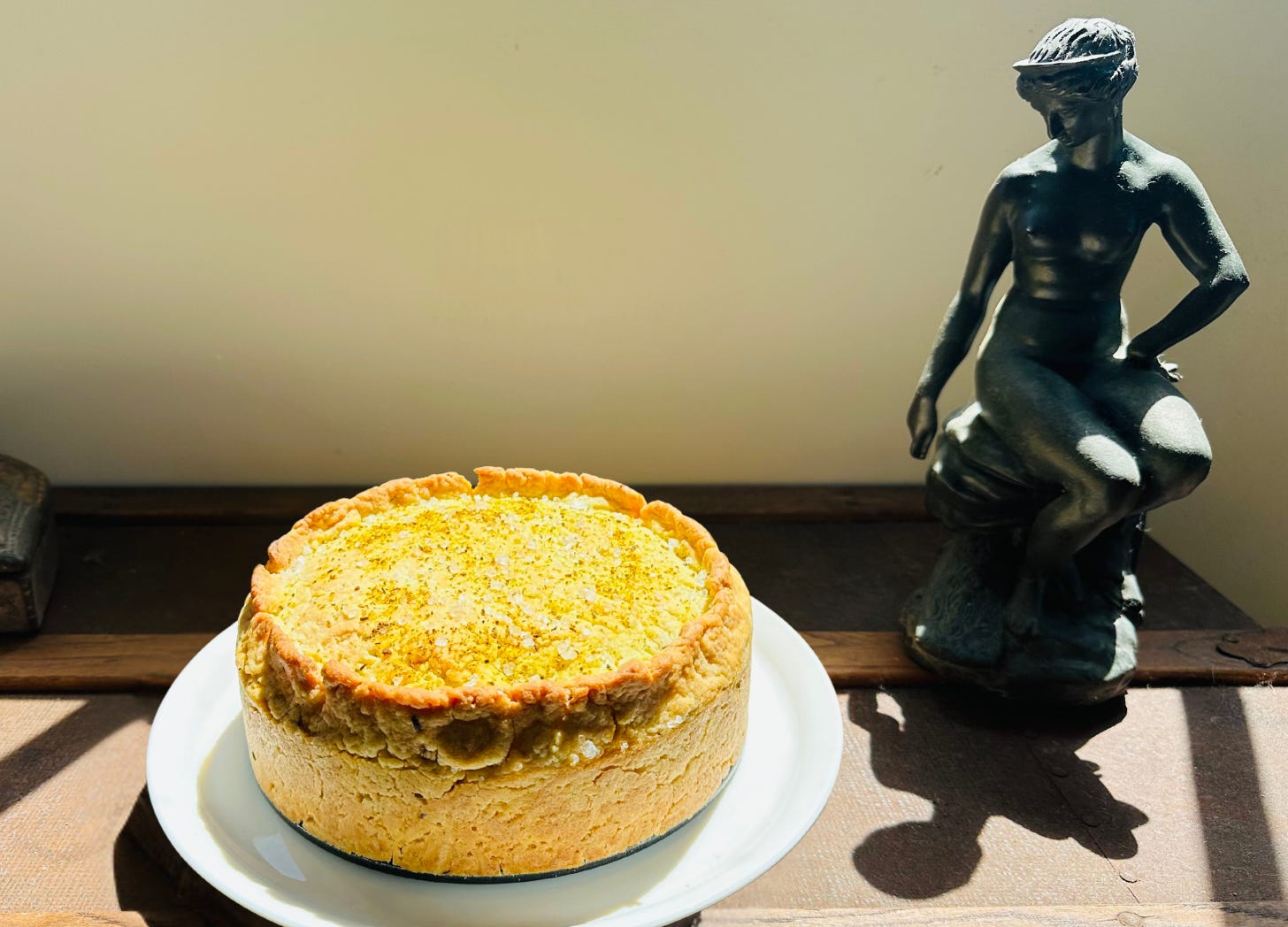
Today, on Pie Day, I am sharing a pie that is entirely my own invention. I have never come across an Indian post colonial pie, and that is exactly why the idea held me. It did not arrive as a recipe from a book, nor as a recognised dish from any established tradition, but in that stranger way kitchen ideas sometimes come, gathering themselves from memory, reading, appetite, and a half formed thought that refuses to leave.
Earlier this week I woke thinking about Andrew from Vanilla Black and the little pie he shared in the Pie Palooza post late last year, the same collective post in which I shared my mushroom pie. His pie had stayed with me, not in any particularly orderly way, but as certain food ideas do, patiently waiting until they find the right moment to return. This week it did, and I decided I wanted to make a little curry pie of my own, using Andrew’s pastry as the starting point, though not following it slavishly. In my version I replaced some of the oil with ghee, which gave the pastry a deeper richness with the cumin seeds and immediately nudged it toward the direction I was already imagining.
The filling took shape in much the same way, not as anything I would call traditional, but as something consciously hovering in that uneasy culinary space left behind by empire. I made a mild curry with minced beef, currants, potato, sweet potato, carrot, edamame, tomato and aromatics, seasoned with garam masala and my Sri Lankan white curry blend. It was never meant to stand in for Indian food in any broad or confident sense, because that would be absurd. What interested me was the old colonial habit of absorbing curry into the British domestic imagination, softening it, simplifying it, and making it legible within the forms of British comfort cooking. That, to me, is part of the story this pie is telling.
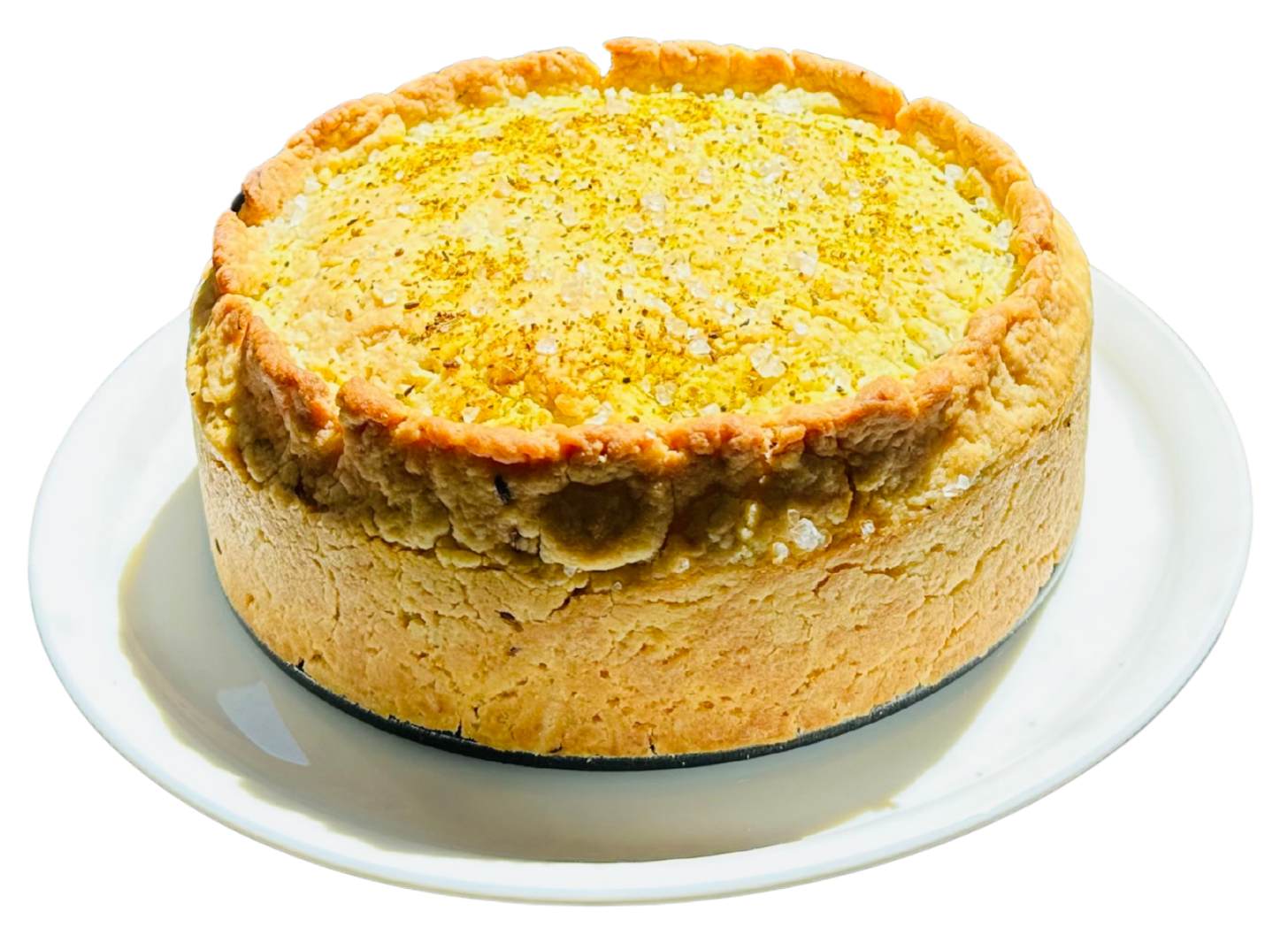
The first pies were small, and this larger pie followed because I had filling left over from those earlier experiments. I had intended, at first, to top it with spiced mashed potato and lean more fully into the cottage pie idea that had been hovering behind it from the start. But when I saw how much pastry I had, I changed course. Instead of capping it with mash, I enclosed the pie completely, sealing the filling within a rich pastry shell and serving the spiced mashed potato on the side. That mash, dressed with my tamarind sauce, which I have written about before, ended up feeling more right than the original plan.
As I was making it, I found myself thinking not only about pastry and curry, but about Sam Dalrymple work on Partition and the dismantling of the British Indian Empire. I have been reading and listening to his work recently, and two images from his Smithsonian lecture stayed with me. One was a newspaper map published just one month before Partition, still sketching out how India might be split up, as though the carving of land and people remained an open administrative problem almost to the end. The other was a map of the British Indian Empire in 1921, showing British India, princely states, and informal princely states across a region far larger and more entangled than many people now imagine when they think of the modern nation states that emerged from it. Those maps are startling because they reveal so clearly the scale of imperial presumption, the confidence that vast human worlds could be surveyed, portioned, and reassigned with a pen.


There is something chilling in the word partition because it sounds so controlled, so managerial, so clean. Yet nothing about it was clean. The retreat was hurried, the division brutal, and the consequences catastrophic. I do not use that history lightly, and I do not mean this title as a glib play on words. I call this a Post Colonial Pie because food, too, carries the residues of empire, not only in ingredients and trade routes, but in naming, in adaptation, in domestic habit, and in the strange culinary hybrids that remain once power has formally withdrawn. Empire lingers in the kitchen long after it disappears from the map.
Sam Dalrymple’s Smithsonian lecture ‘Shattered Lands” and his book are required reading for the exam at the end of this post.
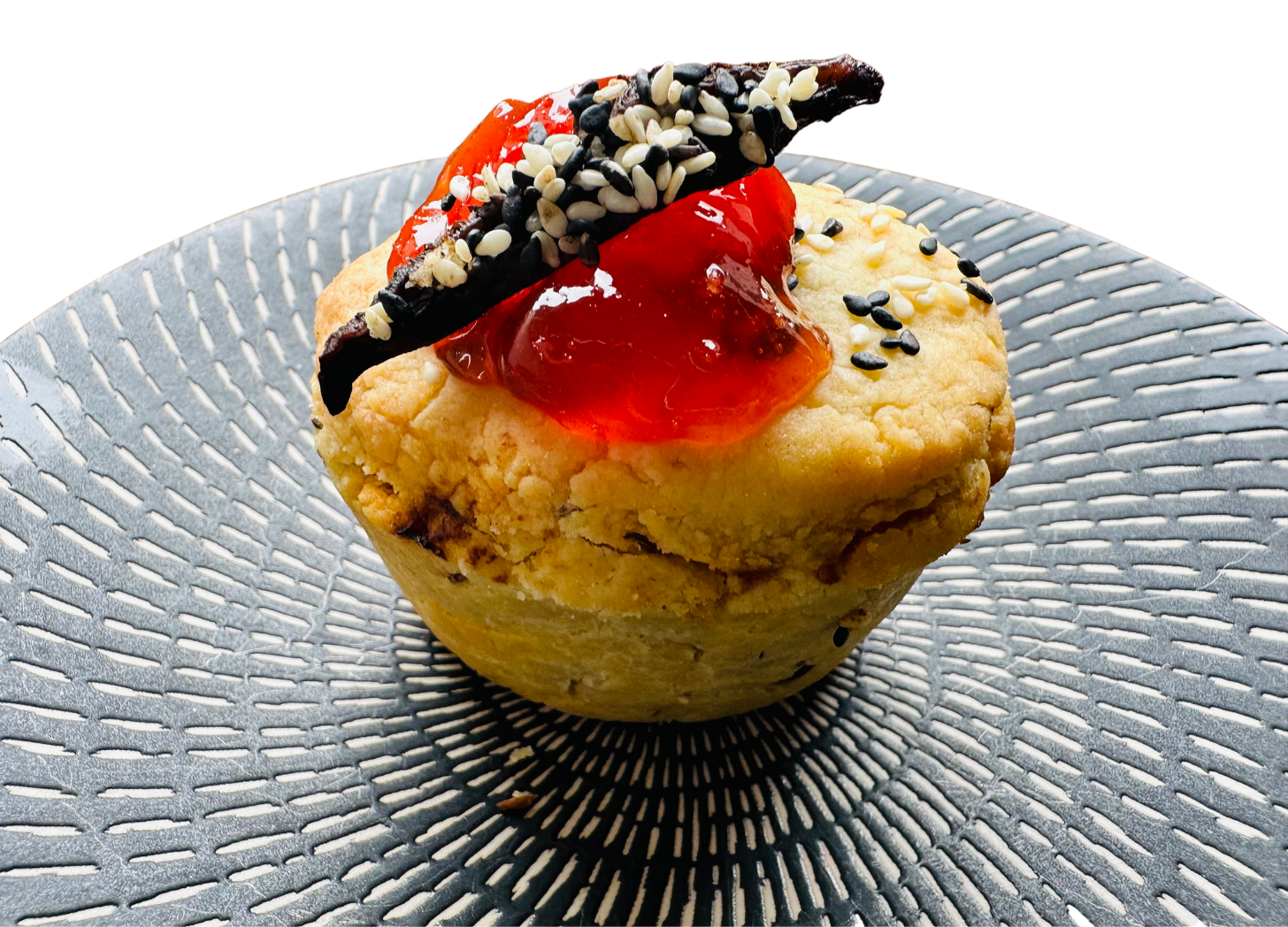
This pie interests me because it sits in that in between place where so much post colonial food lives. Its structure nods to cottage pie, yet the filling turns toward a mild colonial curry. The pastry began with Andrew’s recipe, then shifted in my hands with the addition of ghee and cumin, becoming something richer and more my own. I marinated shiitake mushrooms in Worcestershire sauce, perhaps my small nod to the British pantry, scattered them with sesame seeds, and dried them in the oven until they became dark, savoury shards. Served with my tomato jelly and one of those mushrooms perched on top, the pie seemed to gather many culinary threads onto the one plate, sweetness and savour, spice and preservation, improvisation and inheritance.
What drew me most was not the idea of creating something pure or fixed, but of allowing the pie to reflect the way dishes often evolve in an ordinary kitchen. It grew out of leftover filling, a borrowed pastry reshaped through my own instincts, an earlier plan for spiced mashed potato that ended up beside the pie rather than on top of it, and the presence of my tamarind sauce and tomato jelly, both already part of my culinary world. It also grew from a week of thought, and from reading and listening to Sam Dalrymple speak about empire, borders, and Partition. That unsettled quality feels right for a pie like this, because so much of what we cook after empire is shaped by layers of adaptation, memory, and movement.
Indian Post Colonial Pie
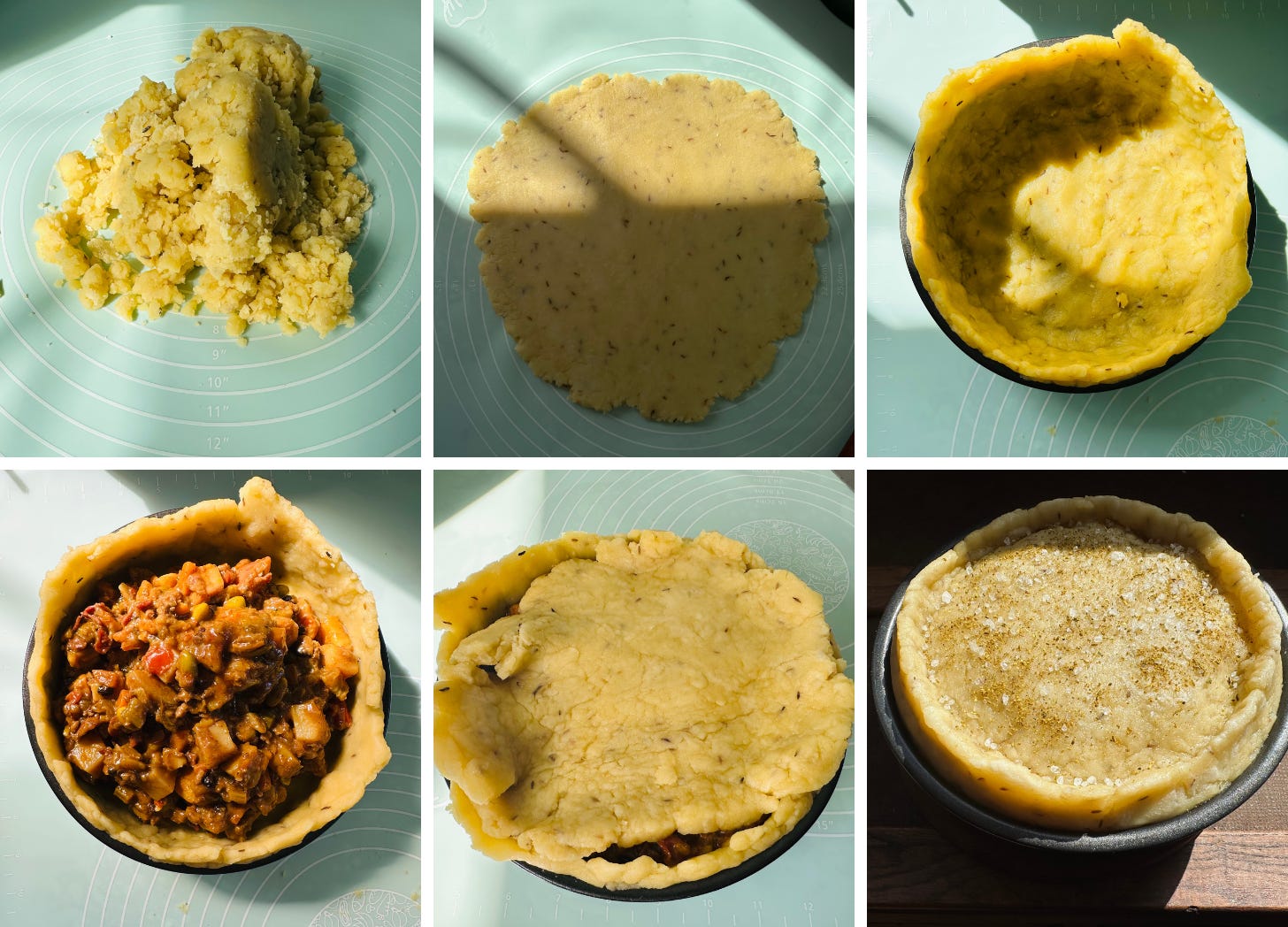
That is also why I have resisted turning this into a strict recipe post. What matters to me here is not a fixed formula so much as the path by which the pie came into being. It began with Andrew’s little pie from Pie Palooza, moved through my own mild curry filling and altered pastry, and arrived here today as a larger enclosed pie made from the remains of earlier cooking. The spiced mashed potato I had first imagined as the topping found its place on the side with tamarind sauce, and in the end that felt truer to the spirit of the dish. Sometimes a pie, like any other dish, becomes itself by straying from the first plan rather than adhering to it.
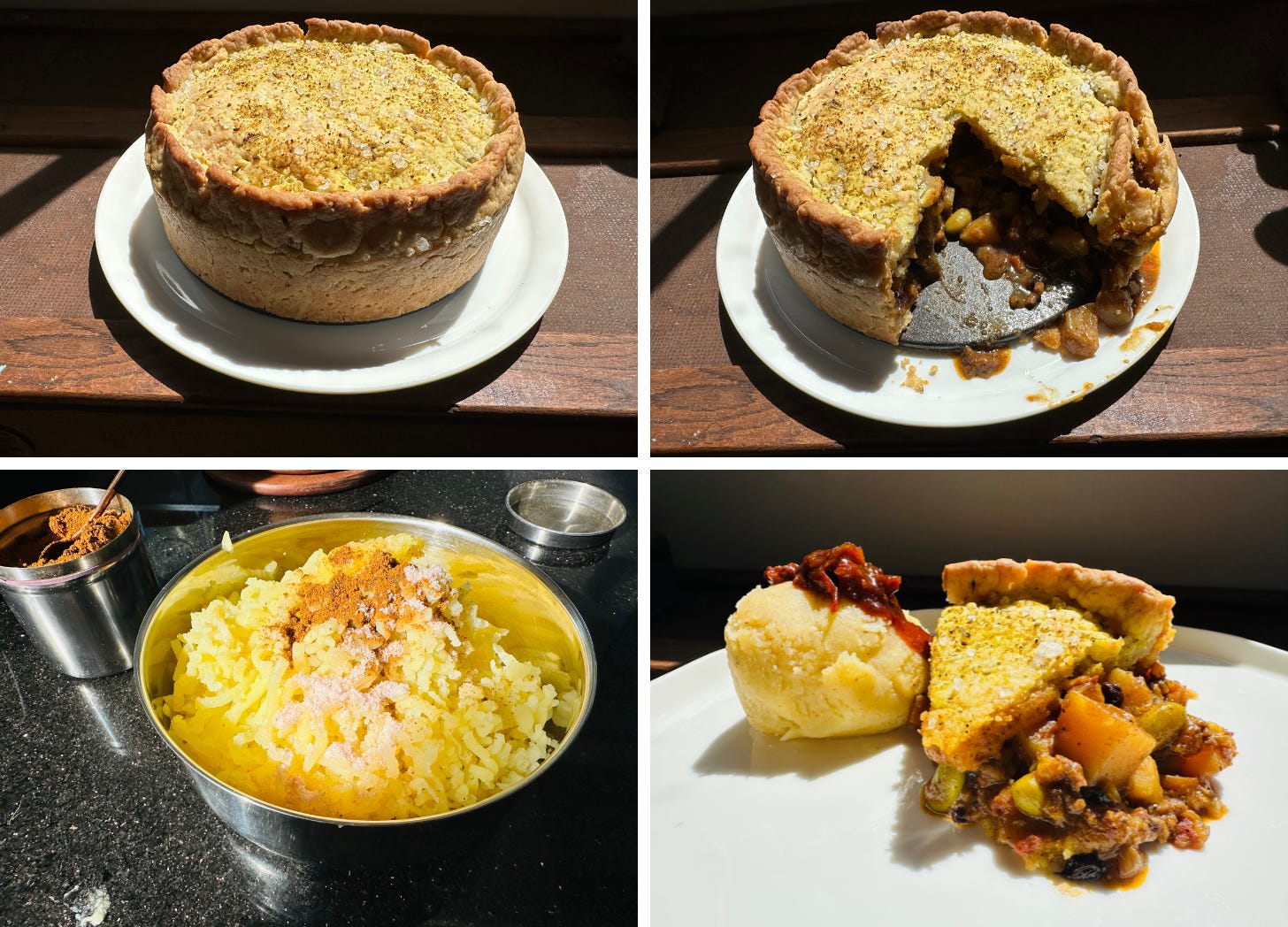
So this is my Post Colonial Pie. It is not a classic, nor a traditional dish, nor a recipe I expect anyone else to reproduce exactly. It is a pie shaped by leftovers, reading, memory, borrowed recipes, and the everyday decisions of the kitchen. It is also a reminder, at least for me, that food can hold comfort and contradiction at the same time, and that even something as homely as pastry filled with curry can carry the imprint of larger histories.


If you have made it this far, thank you for staying with me through pie, empire, memory and leftovers. Do watch Sam Dalrymple’s Smithsonian lecture, and consider his book part of the wider reading for this particular kitchen meditation. I have also linked in the other posts that sit around this pie in my own culinary world, because this one did not arrive alone.
As always, if this post stirs a thought, a memory, or a story of your own, I would love to hear from you in the comments.

©Lisa McLean 2026
All photography on Culinary Repertoire ©Lisa McLean 2026
I love how your pie tells a story applicable to any colonial setting, it's a proud and spiteful pie. No need for a recipe; it wants to be re-invented many times.
Lisa, this was a very thought provoking piece that is relevant no matter where we come from. One way or another, what ingredients we use, or techniques or equipment- their origins might have been brought over, and became part of us.
I commend you for honoring the origins of such ingredients that are more than just exotic sounding spices, but the history behind why obtaining them were a source of conquest for power- and the adaptions the ingredients had when ingredients from the original origin brightened a new world.
From looking at ingredients from the science perspective, the nutritional/ healing affects, variations on culinary approaches- to human history: You are cooking anthropologically, with lots of love and compassion.
So much respect. Thank you for sharing!